EB-3 route map
Where you start decides your EB-3 route
Every EB-3 case goes through the same first stops: PERM and I-140. Then the road splits. Pick your starting point and see your route.
Where are you starting from?
Tap your situation.
Route: adjustment of status (I-485)
- PERM and I-140 with your employer
- When your priority date is current, file I-485 in the U.S.
- Get a work permit and travel document while you wait
- Green card arrives by mail, sometimes after an interview
Keep your status valid all the way. Gaps can push you to the consular route.
Route: depends on your history
- PERM and I-140 like everyone else
- A lawyer checks how you entered and every status since
- Some can file I-485 in the U.S., others must finish at a consulate
- Plan B is prepared before you file anything
Since May 2026 USCIS looks closer at status history. This is the first thing to check.
Route: consular processing
- PERM and I-140 while you stay home
- National Visa Center collects fees and documents
- Interview at the U.S. embassy
- You enter the U.S. with an immigrant visa and get the green card by mail
Interview scheduling has been delayed since August 2026.
Route: needs a careful plan
- PERM and I-140 can still go ahead
- Overstays over 180 days can block filing in the U.S.
- Leaving the U.S. may trigger a 3 or 10 year bar
- A waiver or another route may be needed
Do not leave the U.S. before a lawyer reviews your case.
What is an EB-3 route?
EB-3 is a green card through a U.S. job. Everyone shares the first part of the road: the employer gets a certified PERM and an approved I-140.
The last part depends on where you are and your status: you either adjust status inside the U.S. with Form I-485, or go through consular processing at a U.S. embassy. Choosing the right route early saves months and avoids traps.
Full route
Seven stops of the EB-3 road
Times are typical for 2026. Your route can be shorter or longer.
Job offer
A U.S. employer offers a permanent, full-time job and agrees to sponsor you.
Prevailing wage
The Department of Labor sets the minimum salary for the job.
Recruitment
The employer advertises the job to test the U.S. market.
PERM
DOL certifies the job. The filing date is your priority date.
I-140
USCIS approves the employer's petition. Premium processing is available.
Visa Bulletin wait
You wait until your priority date is current for your country and subcategory.
Green card
I-485 in the U.S. or an interview at a consulate. Then the card.
The split
Two finish lines
Adjustment of status
- File Form I-485 with USCIS
- Work permit and travel document while you wait
- Stay with your family and job
- Needs lawful status and a clean history
Consular processing
- National Visa Center and Form DS-260
- Interview at the U.S. embassy
- Enter the U.S. with an immigrant visa
- Works when you cannot or should not adjust

While you are on the road
The wait is long. Use it well
Most of the EB-3 route is waiting for government decisions. The people who arrive first are the ones who prepared during the wait.
- Collect experience letters, diplomas and birth certificates early
- Keep your status valid and your address updated
- Check the Visa Bulletin every month
- Do not change jobs before talking to a lawyer
Route guides
Read your part of the map

Skylex Immigration Lawyer
Skylex handles your case from start to finish
EB-3 Route is a guide by Skylex Immigration Lawyer PLLC. Our team prepares PERM, I-140 and the green card step for employers and workers across the U.S.
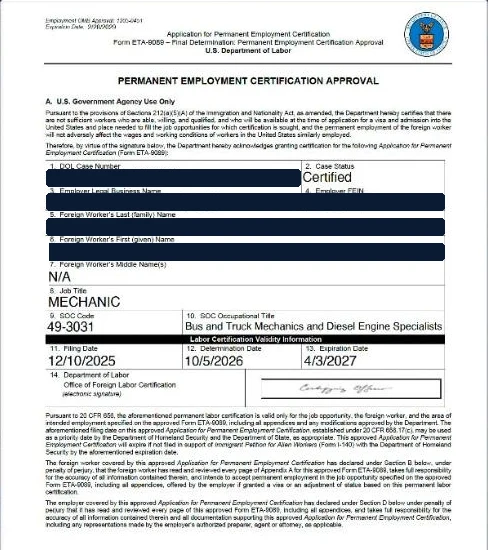 CERTIFIED
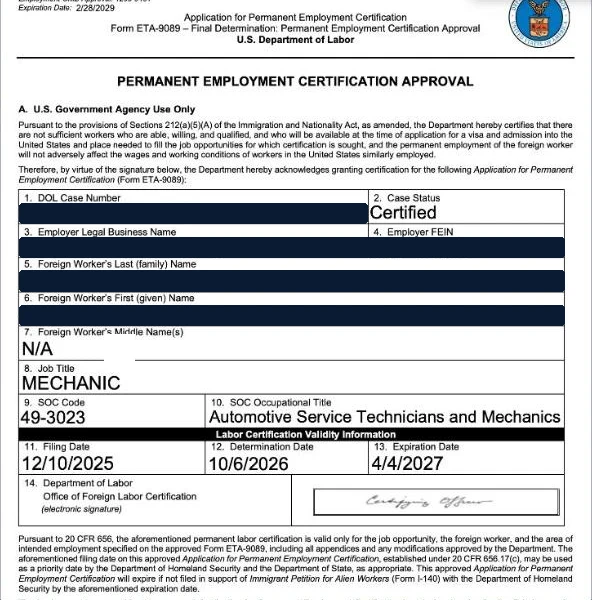 CERTIFIED
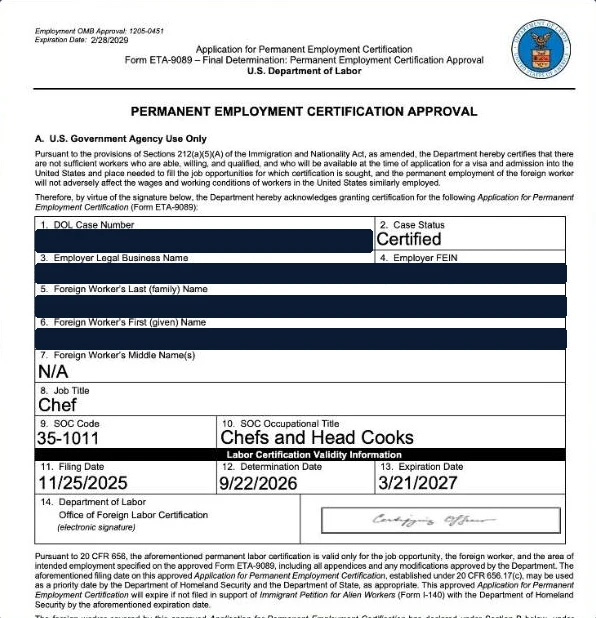 CERTIFIED
Not sure which route is yours?
A lawyer looks at your status history and picks the safest route.
News
Latest news
PERM is getting faster: about 10-11 months instead of 16
The Department of Labor has cut PERM review times sharply during 2026. What it means for a case filed today.
ReadConsulates are still delaying green card interviews. What EB-3 workers abroad should do
Since late August, U.S. embassies have been rescheduling immigrant visa interviews. The delays continue in November.
ReadNew PERM rules are coming: the first overhaul since 2004
A Department of Labor proposal to change PERM recruitment has cleared White House review. Here is what we know.
ReadRoute FAQ
Questions about EB-3 routes
What is the difference between adjustment of status and consular processing?
Adjustment of status means you get the green card inside the U.S. with Form I-485. Consular processing means you get an immigrant visa at a U.S. embassy and the green card after entry.
Which route is faster?
It depends on the year. In 2026 consulates are delaying interviews, so adjustment is often faster for people who qualify. A lawyer compares both for your case.
Can I switch routes later?
Often yes. You can usually move from consular processing to I-485 if you are in the U.S. and eligible, or the other way around. Plan it with a lawyer.
Do I have to be in the U.S. for PERM?
No. PERM and I-140 do not depend on where you live.
I'm on U4U parole. Can I file I-485?
Often yes, but it depends on inspection, every status you held and any gaps. We check your history first.
I'm on TPS. Does EB-3 work?
TPS can help with adjustment in some cases. The details of your entry and history decide.

Free immigration consultation
Not sure if EB-3 fits you? Book a free consultation with Skylex Immigration Lawyer in the Skylex app.